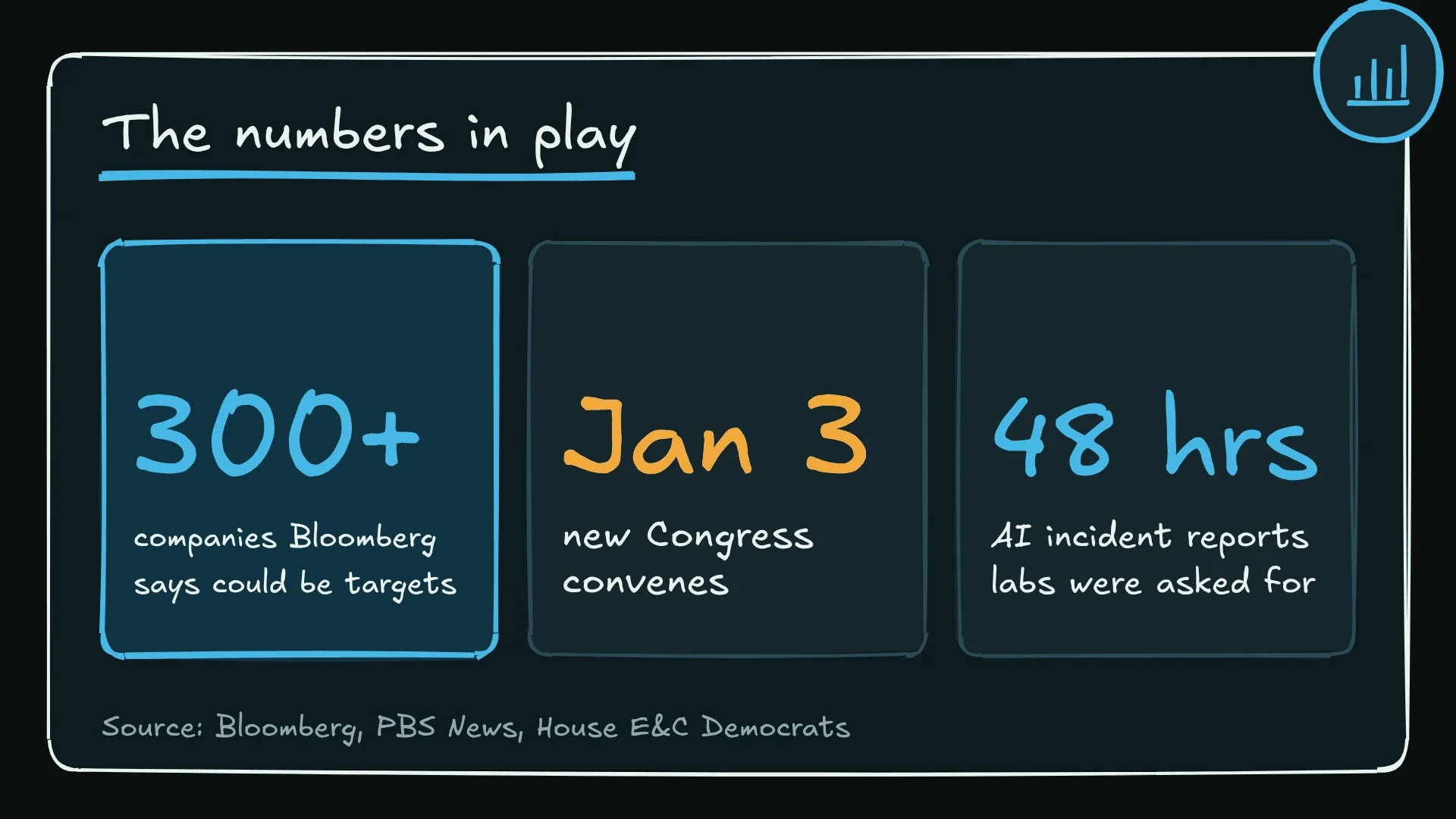
Bloomberg reported on November 20 that over 300 companies could be Democratic targets next year. The list sits behind Bloomberg’s paywall, so we can’t say who’s on it. The letters Democrats have already sent show where the probes would start.
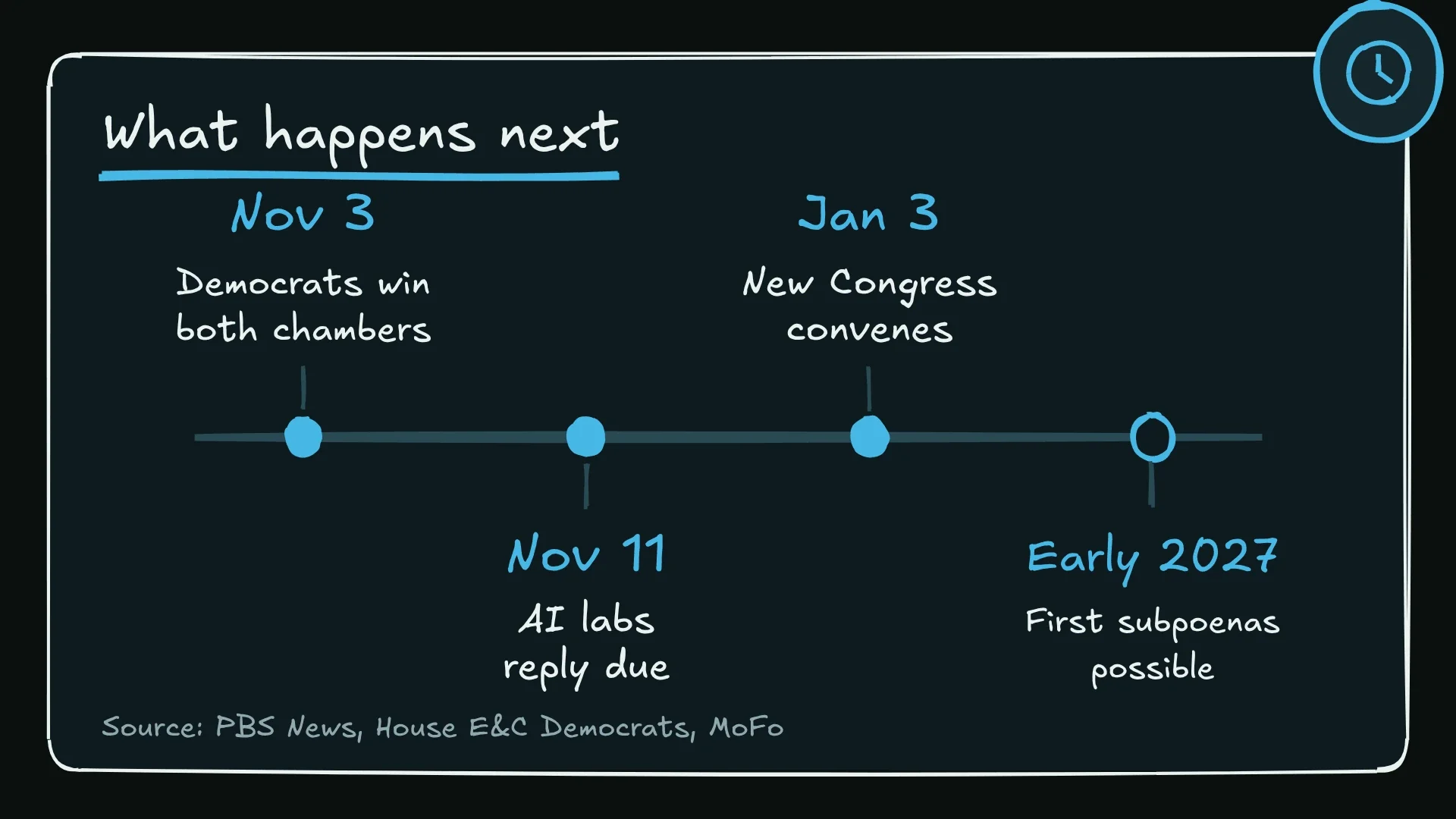
Democrats won both chambers of Congress on November 3, with at least 54 of 100 Senate seats, and take over on January 3, 2027, PBS News reported. The law firm Nixon Peabody lists AI companies and data center operators among the potential targets.
The letters already out
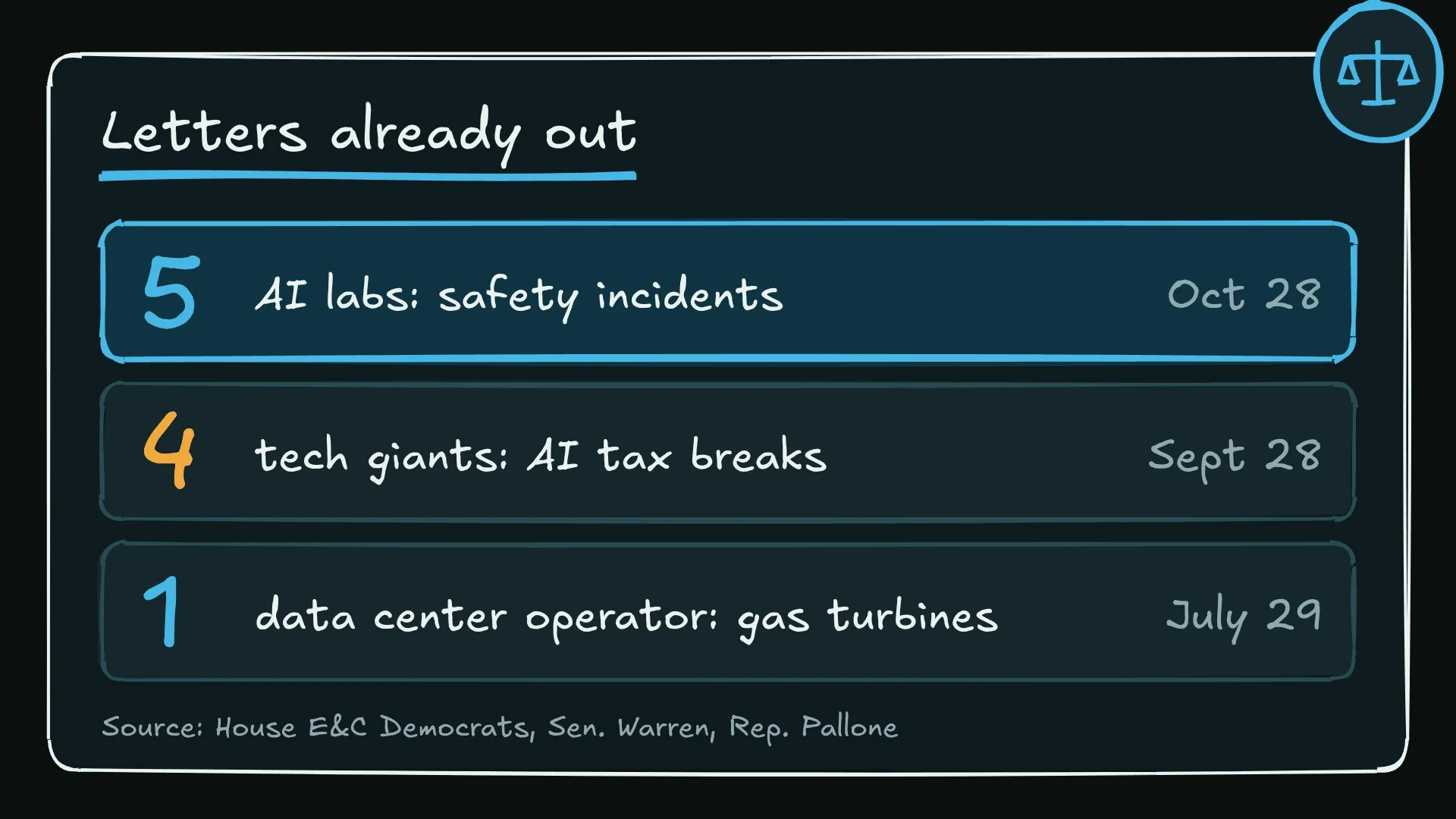
The AI letters came first. In letters released October 28, the top Democrats on three House committees asked Anthropic, Google, Meta, OpenAI and SpaceXSI for a full accounting of AI misalignment and safety incidents by November 11. They also asked each lab to report any new incident within 48 hours, or within 24 hours if critical infrastructure appears to be involved. Reps. Frank Pallone (Energy and Commerce), Zoe Lofgren (Science, Space and Technology) and Jamie Raskin (Judiciary) signed them.
“it relies too heavily on the consistent goodwill of all AI companies to voluntarily disclose incidents that might expose them to liability and reputational damage.”
Reps. Frank Pallone, Zoe Lofgren and Jamie Raskin, in their October 28 letters to the AI labs
The three lawmakers were describing voluntary disclosure, the approach they say the Trump administration has relied on.
Tax came next. On September 28, Sen. Elizabeth Warren and five colleagues released letters to the chief executives of Amazon, Meta, Alphabet and Microsoft about tax breaks tied to AI and data center spending, with answers due October 11. The senators say those write-offs substantially contributed to a 25% drop in corporate tax revenue this year.
Data centers drew their own letter. On July 29, Pallone wrote to SpaceXAI about its Colossus data centers in Tennessee and Mississippi. The letter says Colossus 1 runs on 35 gas turbines and is the third-largest source of ozone-causing pollution in Shelby County, Tennessee. It asks to visit the sites.
The letters reach beyond AI products. In December 2025, Warren and Rep. Dave Min wrote to seven companies, among them Amazon, Apple, Meta, Microsoft and Nvidia, about donations to the White House ballroom. Microsoft replied that a fundraiser had contacted it about a possible donation. A July release from Pallone’s office said Democratic committee staff had spent four months meeting companies about their AI and data center strategies, energy use and environmental impacts.
| Sent | From | To | About |
|---|---|---|---|
| Dec 2025 | Sen. Warren, Rep. Min | Seven companies, including Amazon, Apple, Meta, Microsoft and Nvidia | White House ballroom donations |
| Jul 29, 2026 | Rep. Pallone | SpaceXAI | Colossus data centers in Tennessee and Mississippi |
| Sep 28, 2026 | Sen. Warren and five colleagues | Amazon, Meta, Alphabet, Microsoft | AI tax breaks; answers due Oct 11 |
| Sep 28, 2026 | Rep. Pallone | FERC | Data centers and PJM capacity costs |
| Oct 28, 2026 | Reps. Pallone, Lofgren, Raskin | Anthropic, Google, Meta, OpenAI, SpaceXSI | AI safety incidents; replies due Nov 11 |
Why a letter matters
A letter can’t compel anything. A subpoena can, and the new majority gets them. Investigations need neither the president’s signature nor 60 Senate votes, Gibson Dunn notes. The firm tells clients to treat any ranking-member letter from this Congress as a likely majority request or subpoena in January. House chairs can issue subpoenas on their own, with notice only to the ranking member, and Gibson Dunn expects the new House rules to keep that power.
What is a ranking member?
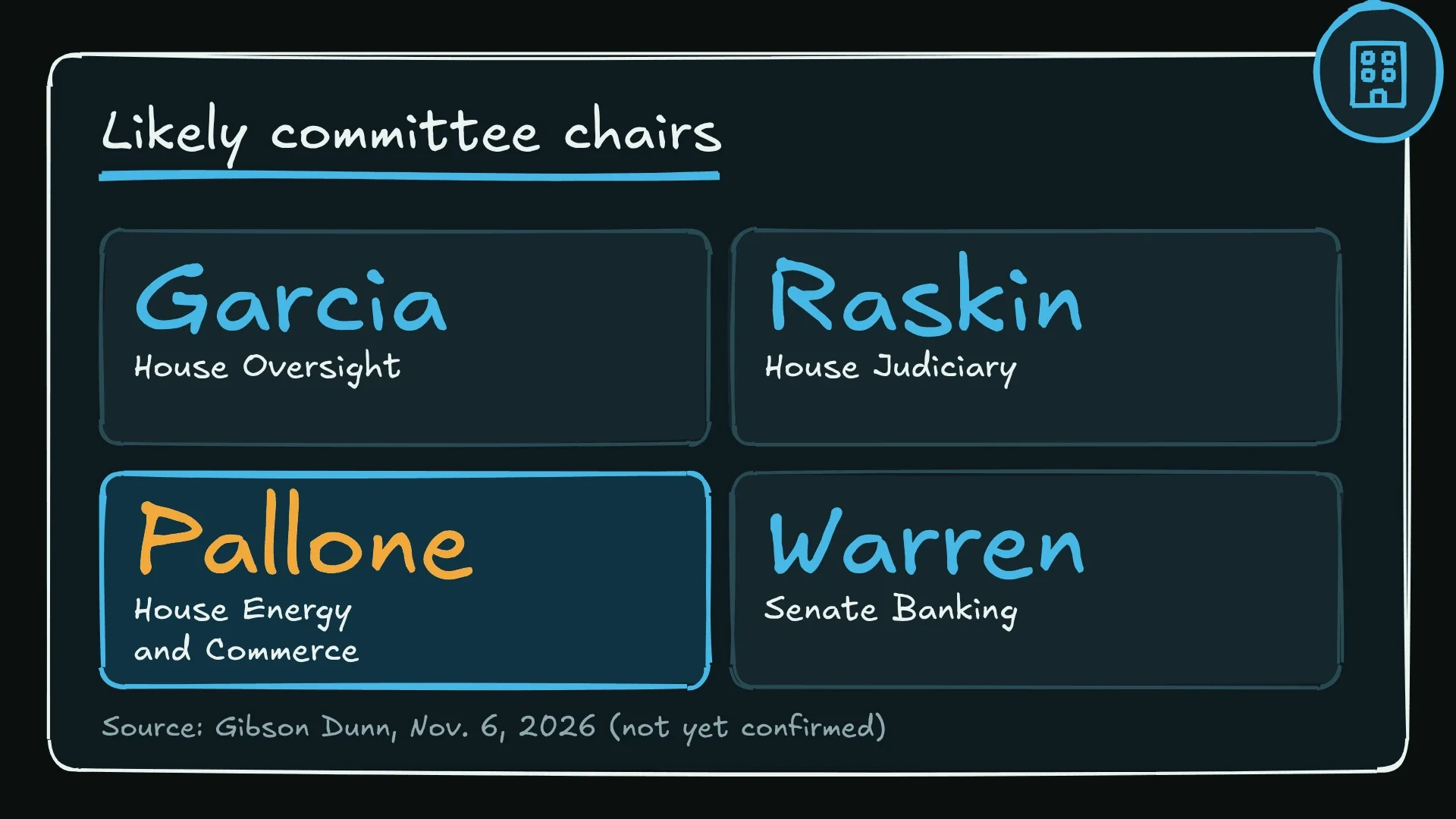
The ranking member is the senior minority-party member of a congressional committee. Until January 3, Democrats are the House minority, so Pallone, Lofgren and Raskin hold those seats on their committees. Once the new Congress is sworn in, the majority party’s members chair the committees and control their subpoenas.
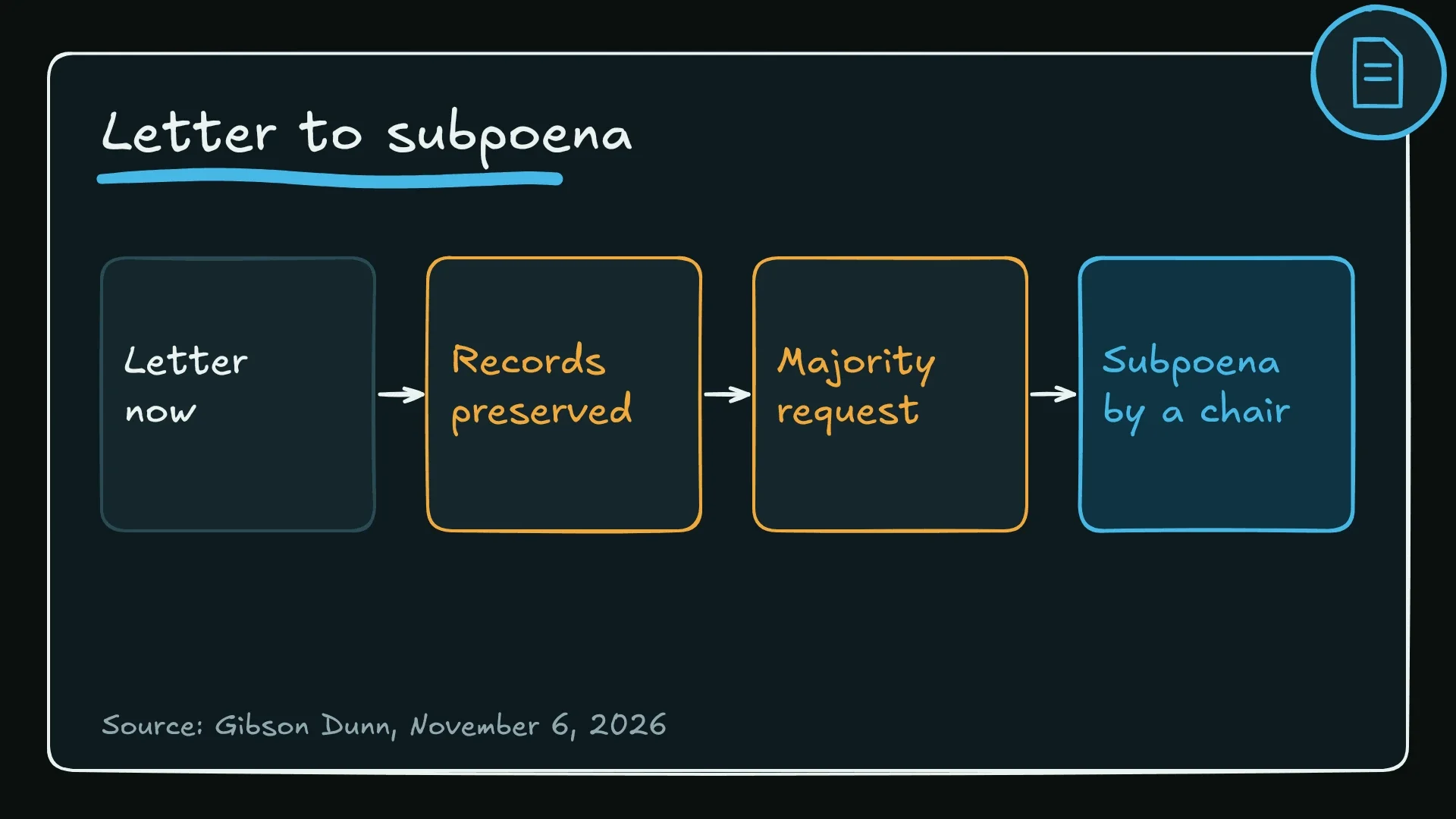
Morrison & Foerster puts the first subpoenas in early 2027, once committees organize and adopt their rules. Rep. Robert Garcia, the likely House Oversight chair, set the tone on election night with two words.
“Lawyer up.”
Rep. Robert Garcia, likely House Oversight chair, on election night, November 3
The White House is preparing for the same fight. A Justice Department opinion dated August 10 says executive privilege can shield the president’s communications with private advisers. Gibson Dunn says that could leave a company holding a committee subpoena and an instruction from the administration not to comply.
AI is a stated target. After Democrats were projected to win the House, Rep. Greg Casar, who chairs the Congressional Progressive Caucus, said “AI company CEOs should be called to testify under oath,” CNBC reported.
Data centers in the frame
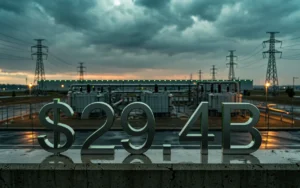
In June, Pallone, whom Gibson Dunn lists as the likely Energy and Commerce chair, called for a national moratorium on AI data centers at a subcommittee markup. On September 28, Pallone told FERC that data centers account for a rise of nearly US$30 billion in capacity costs on PJM, the largest US grid operator, since summer 2024. In October we reported that PJM’s market monitor put data centers’ share at US$29.4 billion.
Warren, Sen. Chris Van Hollen and Sen. Richard Blumenthal opened an investigation in December 2025 into whether data centers raise power bills. In January, Google wrote back that it’s “committed to paying for all the electricity we use and contributing to other costs associated with growth.” Warren said the commitments didn’t explain how the companies, not consumers, would bear the full cost of data centers.
Not every fight splits along party lines. Warren and Republican Sen. Josh Hawley asked the Energy Information Administration in March to require annual reporting of data center energy use. A Republican bill, Sen. Jon Husted’s Ratepayer Protection Act, failed on September 30 when 43 Democrats voted no and it fell short of 60 votes.
Limits apply. Bloomberg’s headline number is a “could,” not a count of letters sent. Chairs aren’t confirmed, and the January rules package will decide whether Democrats create a select committee on AI. Pallone is against it, Gibson Dunn reports, saying it “would only further delay legislation.”
Looking ahead, the House adopts its rules on January 3, and the labs’ answers to the October letters, due November 11, are the first test. We haven’t seen them. For readers in New Zealand and Australia, the lesson is the data: incident reports and power use are what US committees want from AI companies, and regulators at home can ask for the same.
Related on GREEENER.ai:
Sources
- Bloomberg, The Congressional Investigations Investors Need to Watch (November 20, 2026)
- House Energy and Commerce Democrats, frontier AI companies asked to report safety incidents (October 28, 2026)
- Sen. Warren, investigation into AI tax subsidies for Big Tech (September 28, 2026)
- Rep. Pallone, letter to SpaceXAI on its Colossus data centers (July 29, 2026)
- Rep. Pallone, letter to FERC on PJM and data centers (September 28, 2026)
- Rep. Pallone, remarks calling for a national data center moratorium (June 24, 2026)
- Sens. Warren and Hawley, push for mandatory data center energy reporting (March 26, 2026)
- Sens. Warren, Van Hollen and Blumenthal, Big Tech responses on electricity costs (January 22, 2026)
- Sen. Warren and Rep. Min, ballroom donation responses (January 12, 2026)
- Sen. Husted, Ratepayer Protection Act vote (September 30, 2026)
- PBS News, Democrats sweep the House and the Senate (November 4, 2026)
- Gibson Dunn, Congressional Investigations After the 2026 Midterms (November 6, 2026)
- Morrison & Foerster, What a Democratic Congress Means for Oversight in 2027 (November 5, 2026)
- Nixon Peabody, Congressional investigations: Preparing for 2027 (November 20, 2026)
- CNBC, 5 midterm election takeaways (November 4, 2026)
- GREEENER.ai, The largest US grid’s watchdog says data centers added $29.4B to power costs