The company that moderated Facebook for Meta and labeled data for OpenAI in Nairobi is closing. Sama had about US$1 million in assets and US$17 million in liabilities as of October, according to a letter to creditors that TIME reviewed.
Former Sama workers are still suing the company and Meta in Kenya. The letter, dated November 6, 2026, doesn’t say what the liquidation means for those cases.
What the letter says
A bank has a priority claim to “substantially all” of Sama’s assets, the letter says. On October 23, Sama’s US operating company moved those assets to a new firm, Sama ABC, to sell them and pay creditors. The letter says the two companies aren’t affiliated.
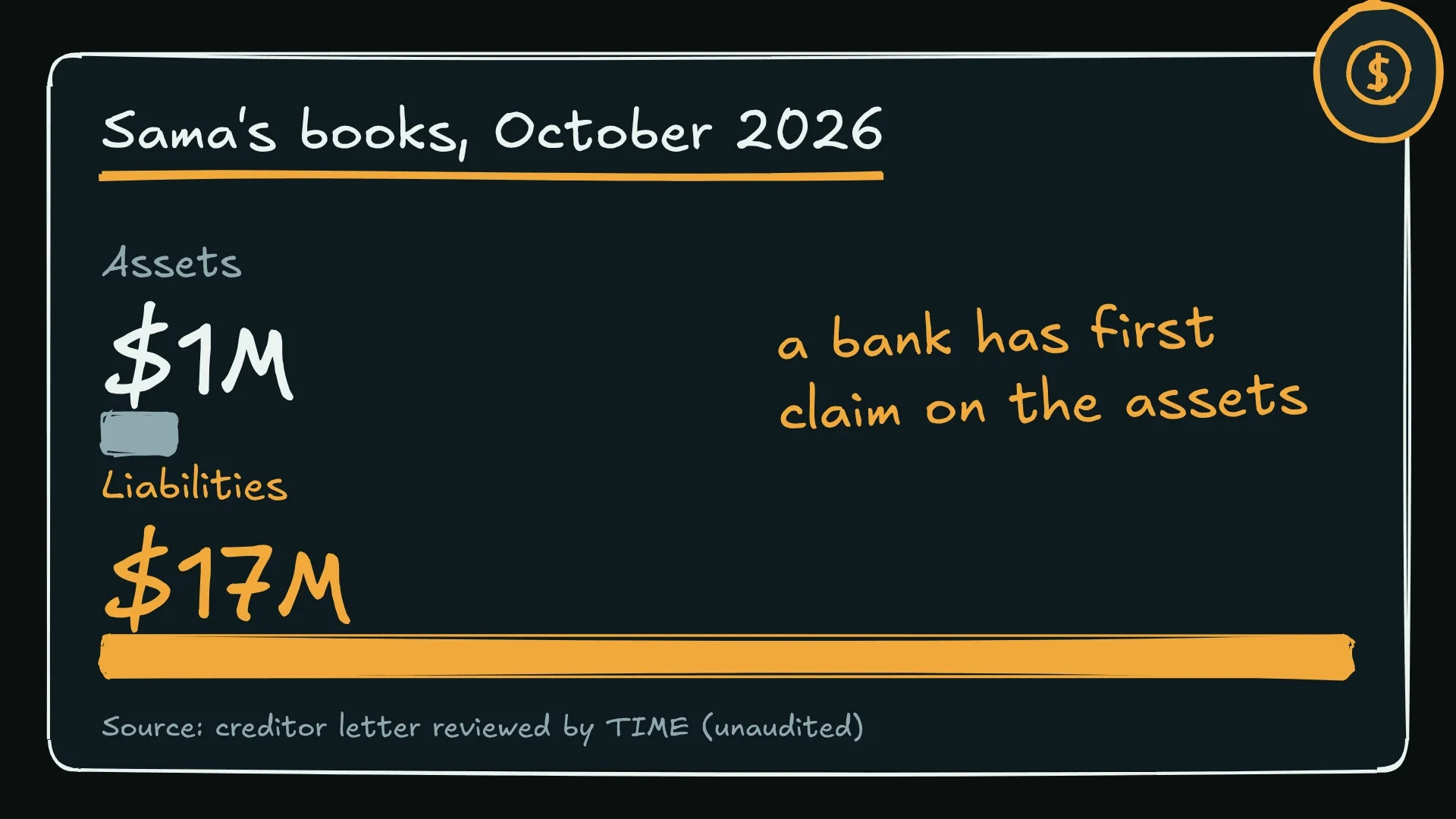
Sama blames falling revenue and class-action lawsuits, without naming the cases. TIME said the company has faced class actions in both Kenya and the US.
“…declining revenues due to increased competition that was compounded by recent class action litigation that would have required significant resources and years to defend successfully.”
Sama’s letter to creditors, November 6, 2026, as quoted by TIME. An email to Sama’s press inbox bounced, TIME reported, and its chief executive didn’t immediately respond.
The letter calls Sama “one of the earliest champions of impact sourcing” and says it “directly impacted over seventy thousand lives.” That figure is the company’s own.
Pay and job cuts
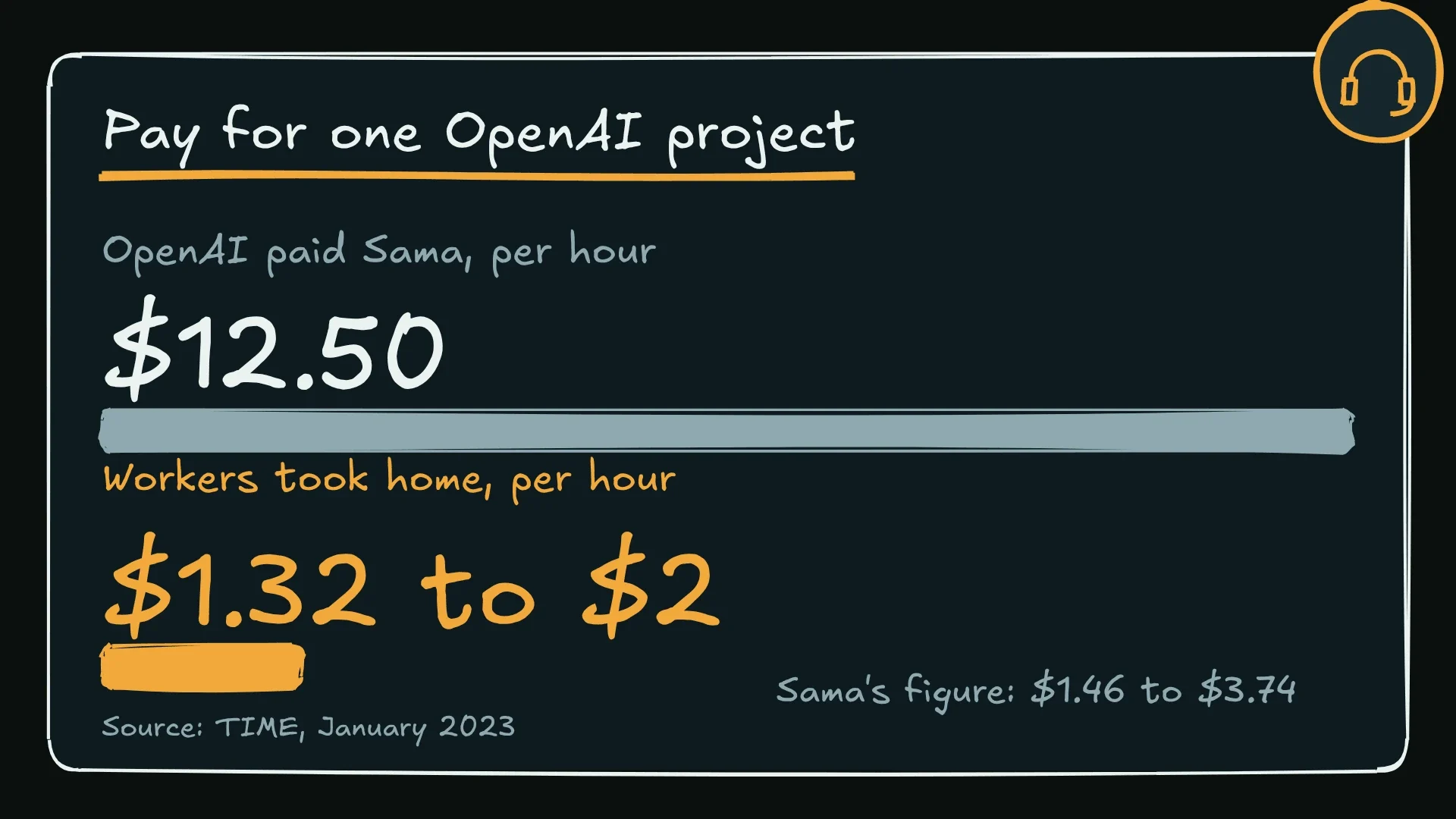
TIME reported in 2023 that OpenAI’s contract paid Sama US$12.50 an hour for a project that began in November 2021. Workers on it took home about US$1.32 to US$2 an hour, according to payslips TIME reviewed. Sama said they earned US$1.46 to US$3.74 after tax and that the US$12.50 covered all project costs. Kenya has no universal minimum wage. Nairobi’s minimum for a receptionist at the time was US$1.52 an hour, TIME noted.
All four workers TIME interviewed said the work left them mentally scarred. Sama said staff were entitled to individual and group sessions with licensed therapists. It has since stopped moderation work, the BBC reported.
In February 2026, Sama workers labeling footage from Meta’s AI glasses told two Swedish newspapers they’d seen users undressing and having sex. In March, Meta said it had paused its work with Sama while it looked into the claims, and Britain’s data regulator said it would write to Meta. Meta said it sometimes uses contractors to review content people share with Meta AI. On April 16, Sama issued redundancy notices to 1,108 Nairobi workers after Meta ended a contract, AP reported.
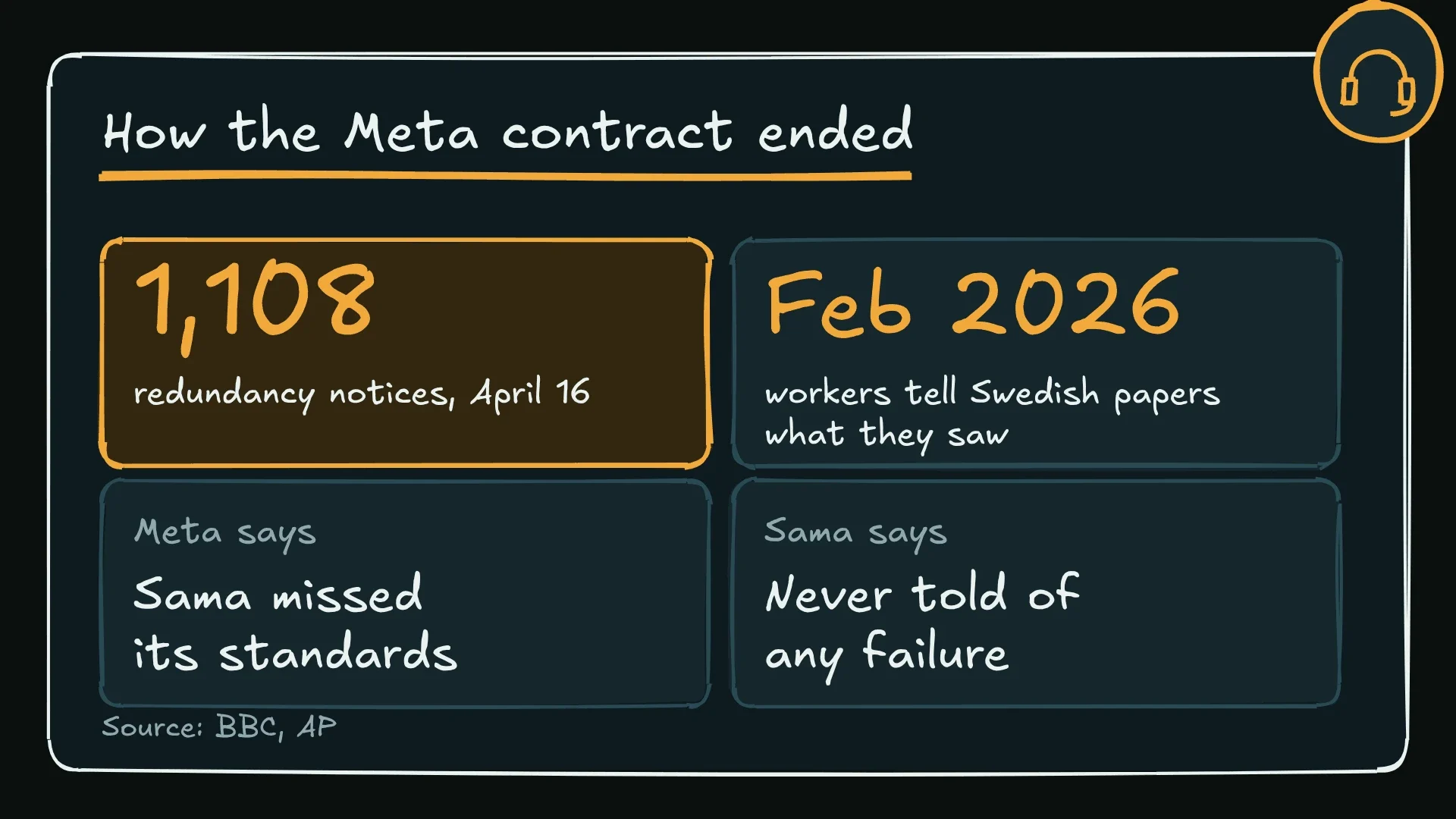
Meta says it ended the work because Sama didn’t meet its standards. Sama says it was never told of any failure. A Kenyan workers’ organization alleges Meta acted because staff spoke out, the BBC reported. Plaintiffs in proposed US privacy suits over the glasses dropped their claims against Sama in August, TIME reported. Meta denies those claims and says it filters out private information.
Who answers for the workers
Former moderator Daniel Motaung, fired in 2019 after trying to organize a strike, sued Sama and Meta in May 2022. His petition is now consolidated with one from moderators who say they were unlawfully made redundant and blacklisted. Kenya’s Court of Appeal rejected Meta’s argument on September 20, 2024 that Kenyan courts have no jurisdiction. Meta denies responsibility for working conditions, and Sama says it followed Kenyan labor law.
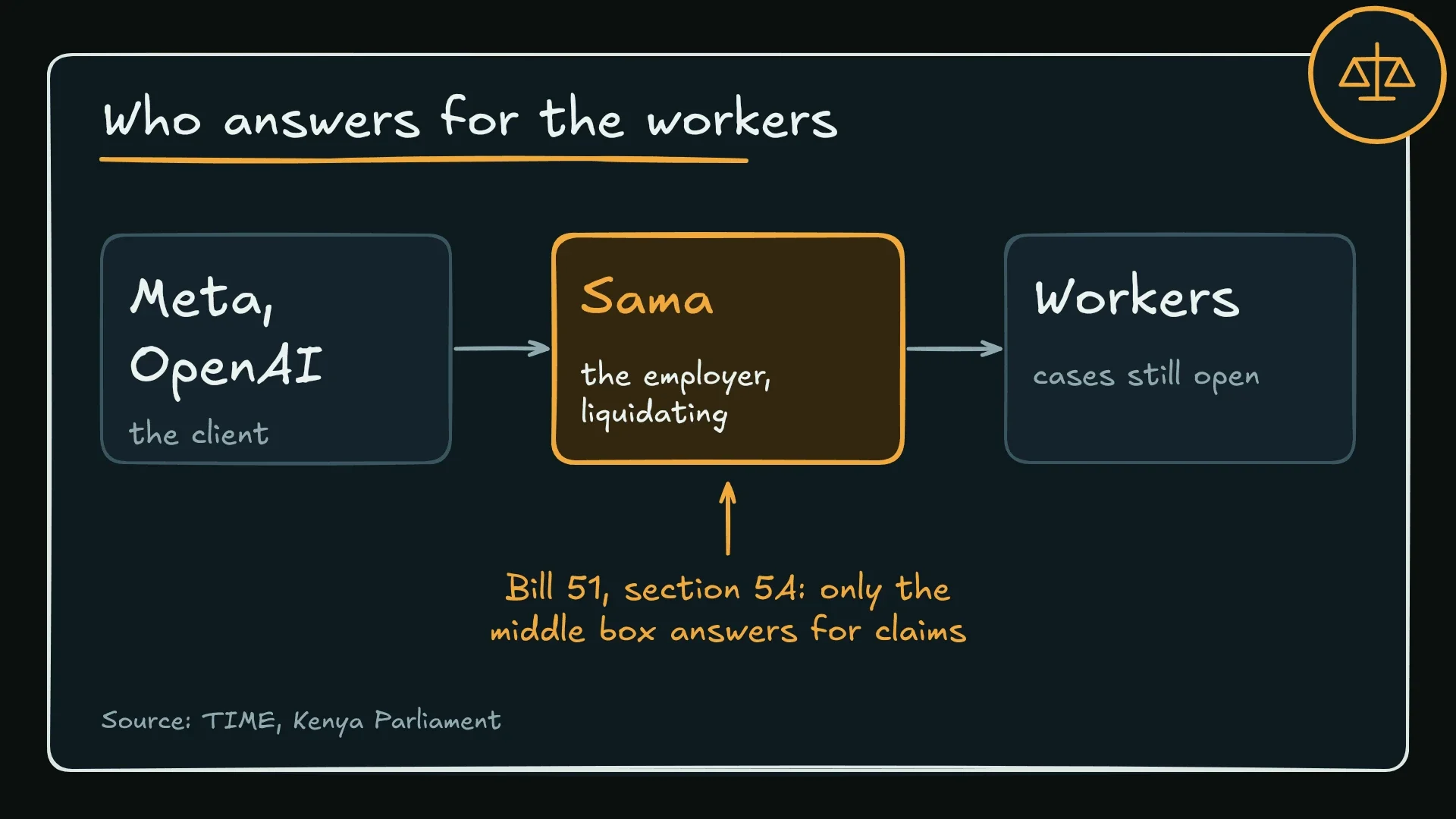
A bill published less than two months after that ruling could shape who can be sued next. As introduced, section 5A of the Business Laws (Amendment) Bill makes an outsourcing company answer for any employee’s claim and bars it from arguing it wasn’t the one benefiting from the work. It puts no duty on the client. Business groups argued responsibility should largely stay with the outsourcing firm, BusinessDay reported. Tech workers argued the companies that control the work should answer too.
On December 9, 2024, President William Ruto said Sama had approached him about its legal trouble. “Now I can report to you that we have changed the law,” he said, BusinessDay reported.
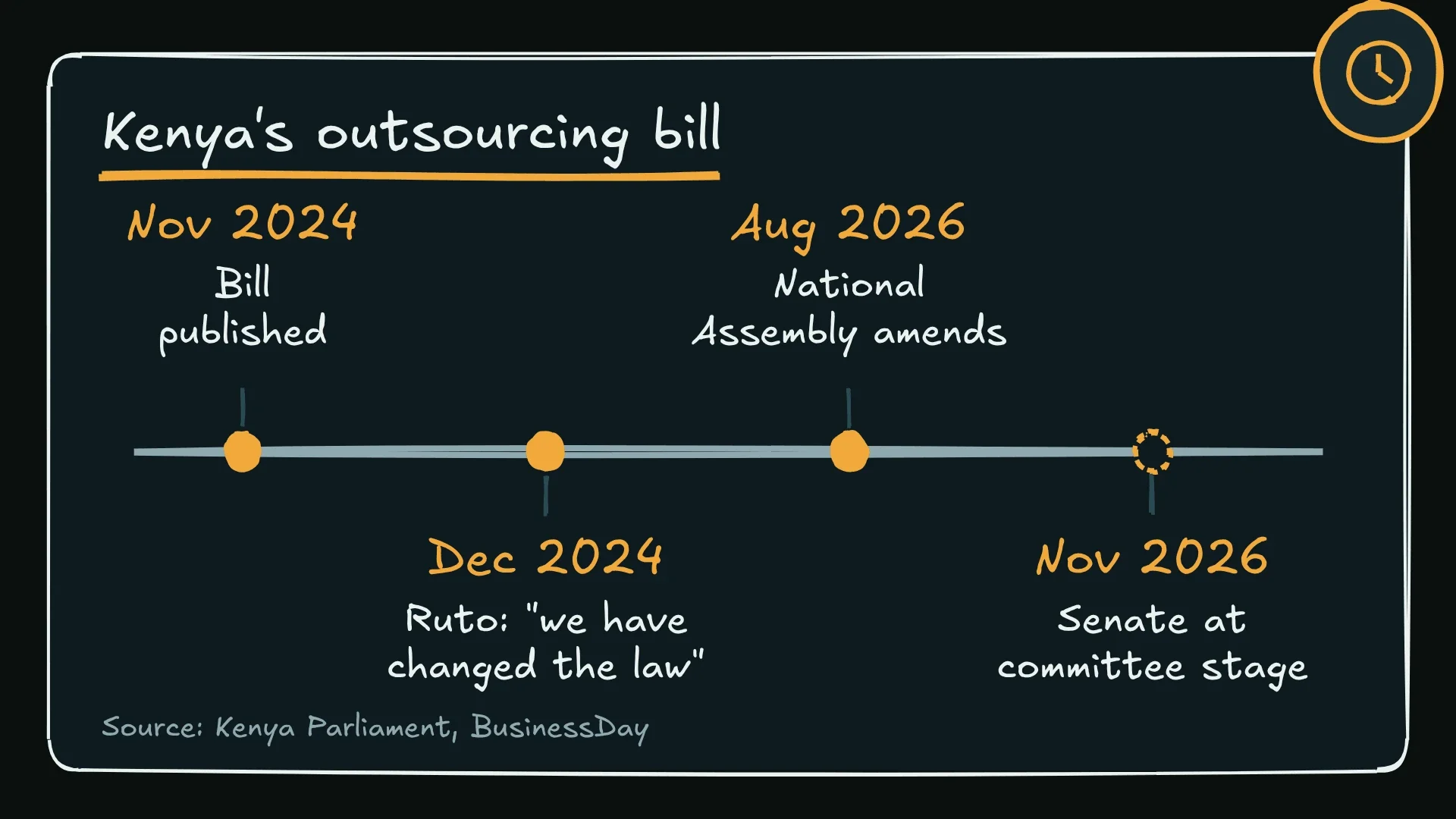
A court declined in June 2026 to stop the bill. The National Assembly passed amendments on August 19, adding a definition of “third beneficiary,” the client the work is done for. The Senate’s notice paper for November 19 still lists the bill at committee stage. The Oversight Lab, which works with the moderators, says one clause would give tech firms immunity from workers’ rights claims and wants Parliament to reject it.
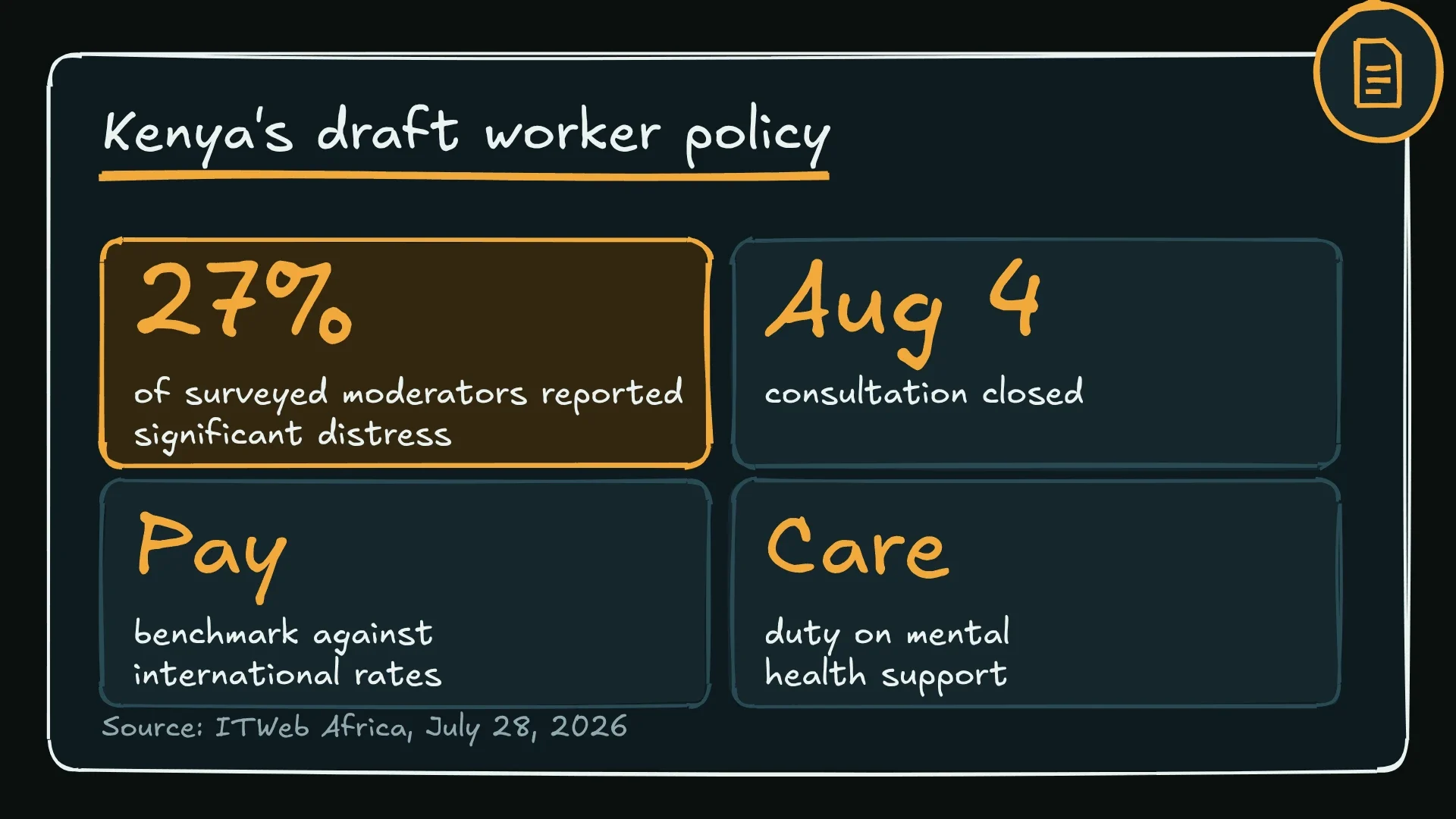
Kenya’s ICT ministry has a separate draft policy. It proposes a fair-pay benchmark against international rates, pay disclosure by employers and a duty of care on mental health. ITWeb Africa cited a study, affiliated with the think tank KICTANet, in which 27% of surveyed moderators reported significant distress. Consultation closed August 4. We found no final version.
Joan Kinyua, president of the Data Labelers Association, said in September that nondisclosure agreements stop workers from seeking professional emotional support or discussing their conditions. On September 9, her association, the Oversight Lab and a French union gave Teleperformance three months to revise its duty of vigilance plan or face a Paris court. Teleperformance told Novethic it runs counseling programs for moderators and audits.
Looking ahead, watch whether the Kenyan cases continue against a company in liquidation, and whether the Senate keeps section 5A as written. Meta remains a respondent, and Teleperformance’s three-month window runs to about December 9. For readers in New Zealand and Australia, the point to note is that outsourcing the hardest work also moves the liability to a contractor that can fold.
Sources
- TIME, Former Meta and OpenAI Contractor Sama Liquidates, Citing Lawsuits
- Kenya Parliament, The Business Laws (Amendment) Bill, 2024 (Senate Bills No. 51 of 2024)
- Kenya Senate, order and notice paper for November 19, 2026
- TIME, OpenAI Used Kenyan Workers on Less Than $2 Per Hour
- AP, More than 1,000 workers in Kenya face layoffs after Meta ends contract with Sama
- BBC, Dispute over fate of Kenyan workers who saw Meta AI glasses films
- BBC, report on Meta AI glasses and contractors, March 4, 2026
- BusinessDay and the Pulitzer Center, Inside Kenya’s hidden deals with Big Tech
- ITWeb Africa, Kenya sets standards for AI workers
- Techweez, Meta faces fresh pressure over content moderators’ mental health
- Citizen Digital, Stakeholders push for data sovereignty as AI conference tackles worker exploitation
- Formal notice to Teleperformance, September 2026
- Novethic, on Teleperformance and its duty of vigilance (in French)