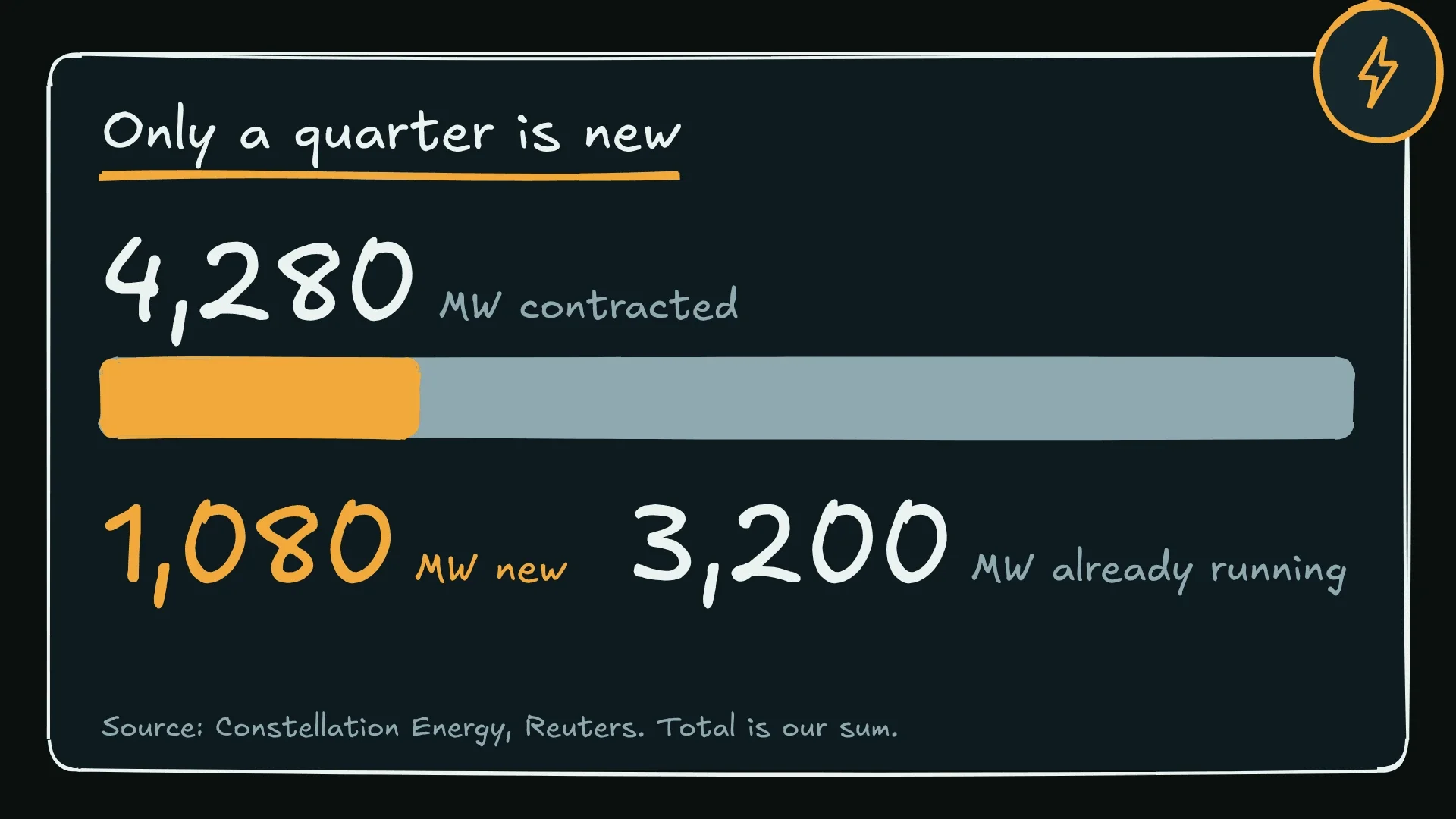
Google’s October 6 deal with Constellation Energy covers 3,590 megawatts (MW) of nuclear power. Reuters reports that only about a quarter of it is new.
Amazon signed its own Constellation deal six days earlier. Together the two companies contracted about 4.3 gigawatts (GW), by our sum. Constellation puts the new power at 1.08 GW. The rest comes from plants that already run.
New versus existing
Google’s first agreement is a 20-year power purchase for 890 MW. It pays for equipment upgrades at 11 Constellation units across six sites in Illinois, Pennsylvania and New Jersey, with more than US$4.3 billion of new investment. Constellation says the first uprate arrives by 2028, and Google says all 890 MW will be on the grid before the end of 2032. The deal sustains about 4,400 existing jobs and creates about 7,200 construction jobs, according to Constellation.
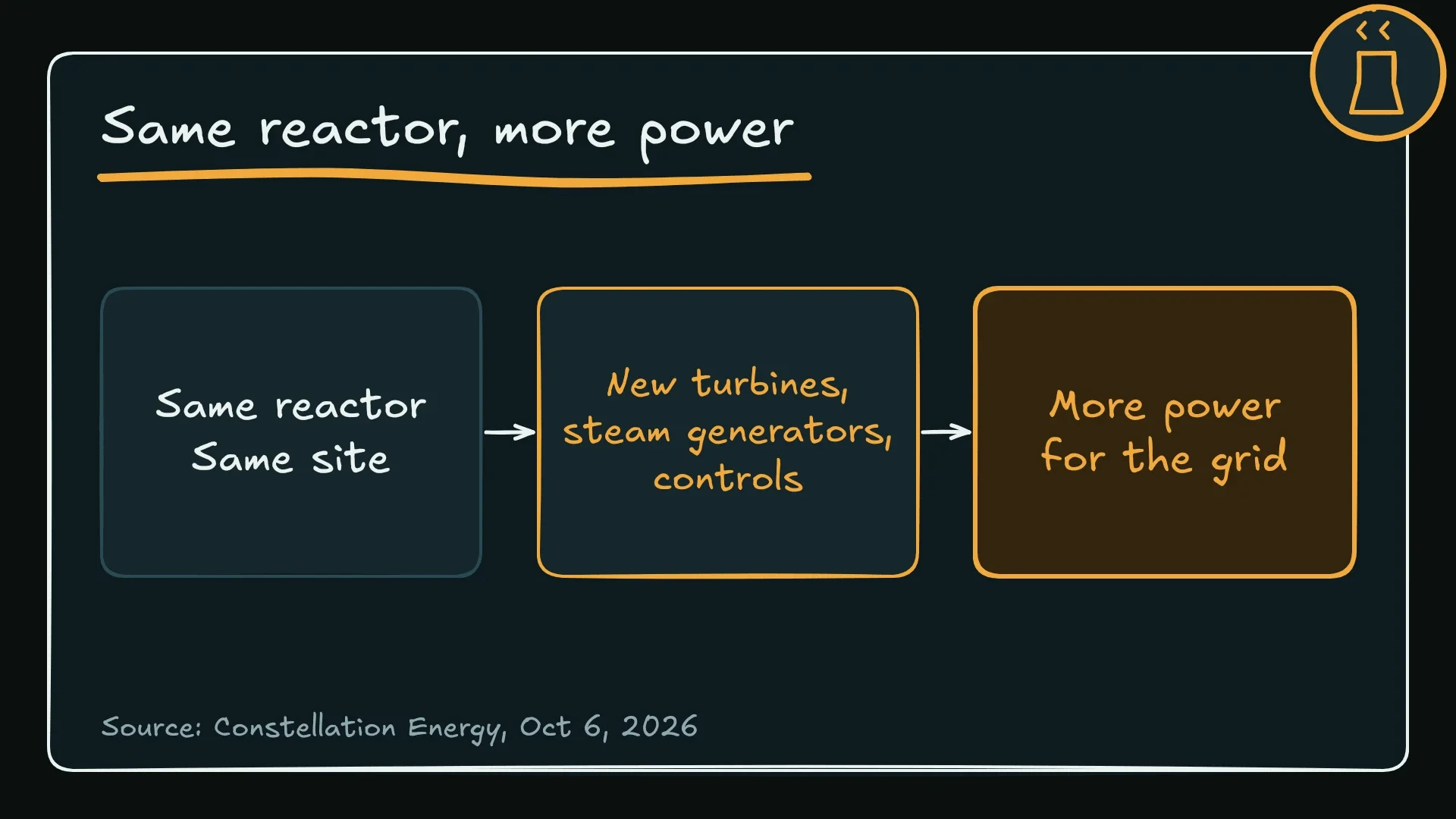
An uprate upgrades turbines, steam generators and digital controls at a reactor that already runs, so it makes more power without a new reactor. Constellation says that avoids the multi-year timelines and grid connection bottlenecks of a new build.
The other 2,700 MW is a separate 15-year agreement. Constellation’s quarterly report calls it a financial energy load following agreement, and the company says it keeps existing plants viable without taking their output off the grid. It isn’t part of the 890 MW of new capacity, and Constellation’s release gives no price. The Google deal also includes demand response, so Google would curtail non-critical load during high-stress grid events.
Amazon’s agreement is a 20-year purchase of 690 MW from Calvert Cliffs, Maryland’s only nuclear plant. Only 190 MW of it is an uprate, coming online between 2030 and 2032. Constellation says the deal enables more than US$3 billion of investment across the 1,790 MW plant and gives it the revenue certainty to relicense the plant for another 20 years. A related retail supply agreement covers Amazon’s operations in PJM, the 13-state grid operator. Calvert Cliffs produces about 80% of Maryland’s clean energy and employs more than 800 people.
Who pays
Constellation says all the power from Calvert Cliffs keeps flowing to the PJM grid, and that the Google deal takes no resources off it. It calls the Google deal a response to PJM’s “Bring Your Own Power” proposal. Google says other ratepayers bear none of the cost.
“Our agreement with Constellation to fund nuclear reactor uprates will strengthen the PJM grid, which serves 67 million people, all while protecting energy affordability and supporting local union jobs.”
Amanda Peterson Corio, Google’s global head of energy and power, said that in Constellation’s release on October 6, 2026.
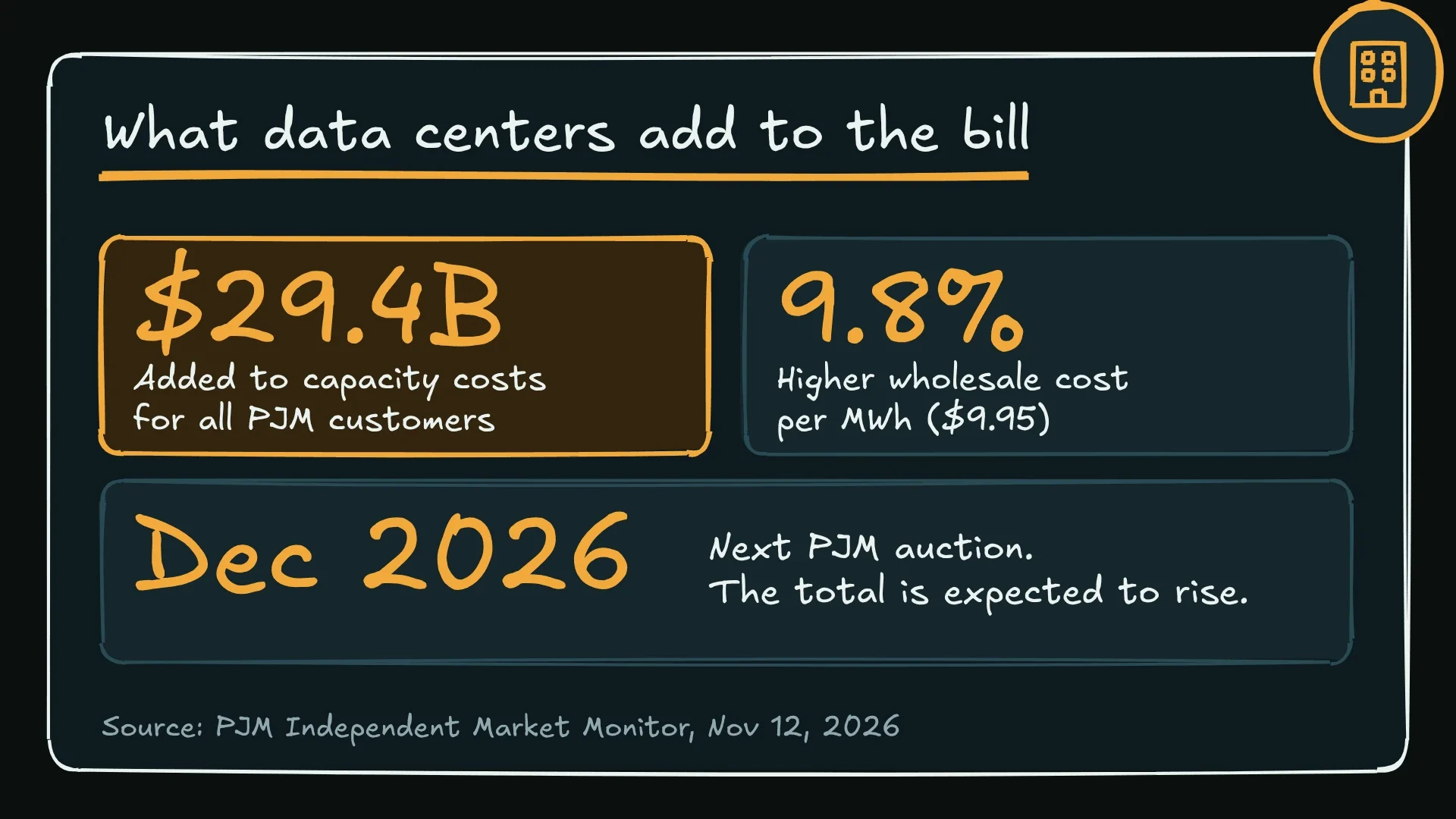
Constellation’s chief executive, Joe Dominguez, said on November 9 that the new megawatts are coming online with “no costs being borne by existing customers.” That answers a different question from the one PJM’s Independent Market Monitor asks. The Monitor says data center demand has already added US$29.4 billion to capacity market costs for all customers, and that wholesale costs are US$9.95 a megawatt-hour, or 9.8%, higher because of it. It expects the total to rise significantly after PJM’s December 2026 auction, and it recommends that data centers bring their own new generation.
Public money may join in. The US Department of Energy has made a conditional commitment to guarantee a loan of up to US$5 billion to Constellation for uprates at eight plants: Braidwood, Byron, Clinton, Dresden, LaSalle, Quad Cities, Calvert Cliffs and Limerick. Constellation’s quarterly report says the loan would run 30 years at 0.375% above US Treasury rates. It isn’t final, and Constellation says it doesn’t commit the company to any single uprate. The company also says the Google and Amazon deals drew more than US$7 billion of investment to add about 1,080 MW.
What’s still to build
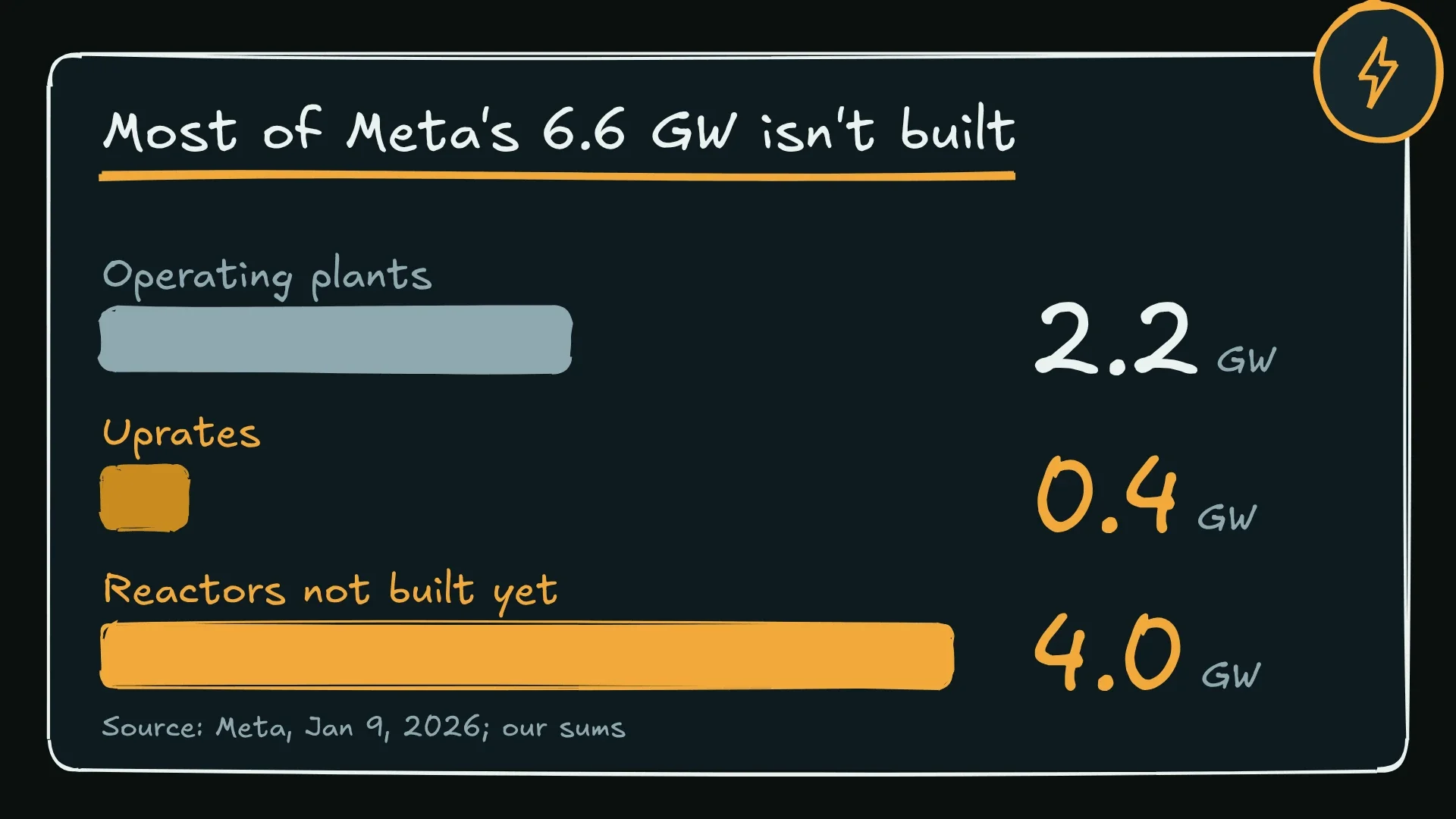
Meta’s January deals show how much of Big Tech’s nuclear plan is still on paper. Meta says they support up to 6.6 GW of new and existing power by 2035. By our count from the company’s figures, 2.2 GW comes from operating Vistra plants in Ohio, 0.4 GW from Vistra uprates, and 4 GW from reactors not yet built: 2.8 GW from TerraPower’s Natrium plants and 1.2 GW from an Oklo campus in Ohio. Meta says its Vistra agreements also extend the plants’ operating lives, and an earlier Meta agreement supports a 30 MW uprate at Constellation’s Clinton plant in Illinois.
TerraPower’s first Natrium plant, in Wyoming, got its construction permit from the US Nuclear Regulatory Commission on March 9, 2026, and the company expects it to be complete in 2030. The two Natrium units Meta is funding can’t deliver power before 2032.
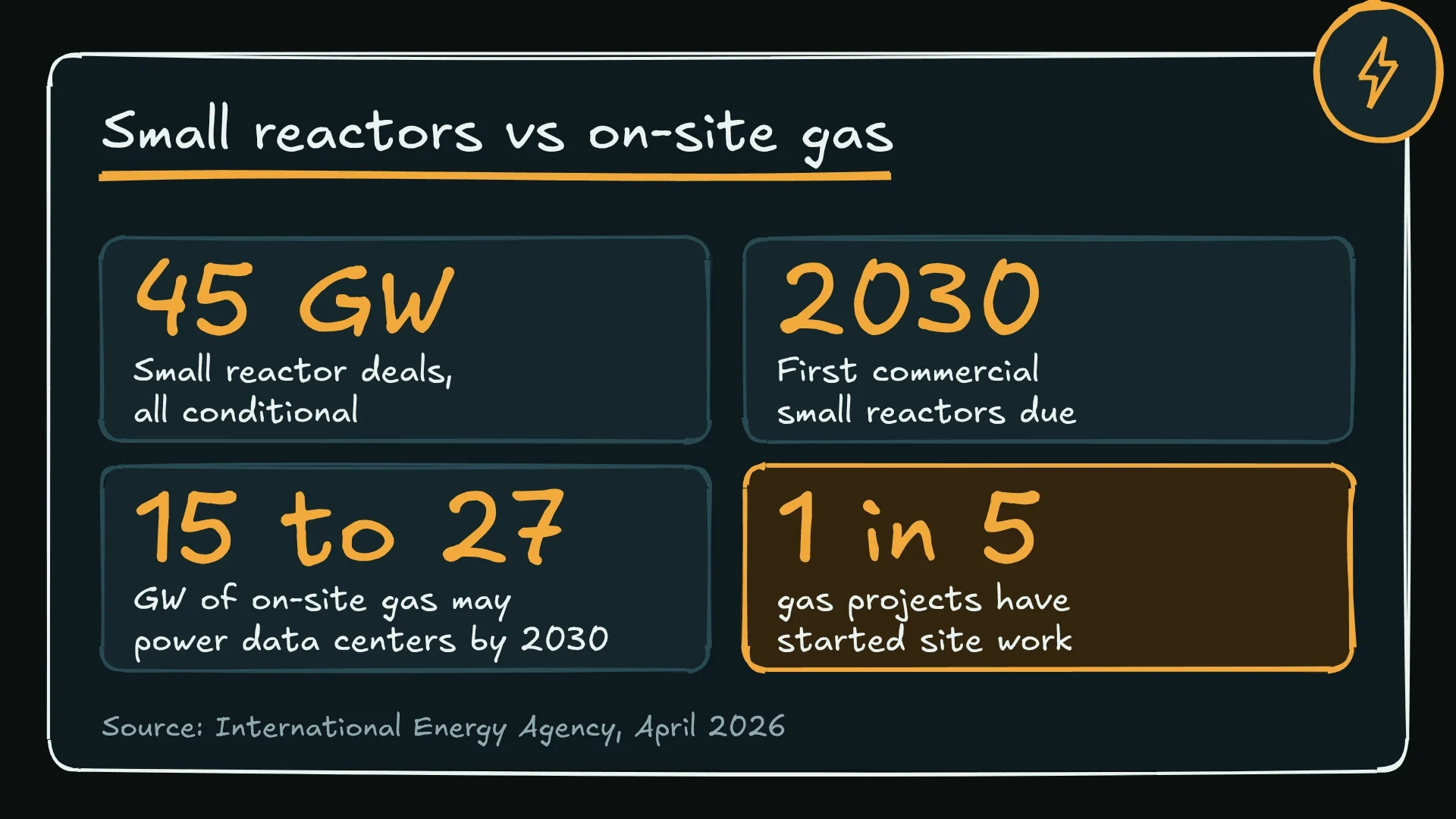
The International Energy Agency (IEA) expects data center electricity demand to roughly double, from 485 terawatt-hours in 2025 to 950 in 2030. It says conditional deals to buy power for data centers from small reactors have reached 45 GW, but the first commercial small reactors are due around 2030. It says 15 to 27 GW of on-site gas may power data centers by 2030, and about one in five of those projects has started site work. Gas turbine orders rose 70% in 2025. The IEA adds that it isn’t clear on-site generation is a faster route, because most data centers prefer a grid connection.
Looking ahead, PJM’s December auction will show how far data center demand lifts capacity costs, and the first uprate is due in 2028. For readers in New Zealand and Australia, the lesson is to separate headline gigawatts from new ones before judging a deal.
Sources
- Constellation, Google and Constellation announce agreement for 890 MW (October 6, 2026)
- Constellation, Amazon agreement at Calvert Cliffs (September 30, 2026)
- Reuters, Google enters 3.6 GW power deal with Constellation (October 6, 2026)
- Google, Why we’re backing America’s existing nuclear plants
- Constellation, conditional DOE loan commitment of up to US$5 billion (October 27, 2026)
- Constellation, third quarter 2026 results (November 9, 2026)
- Meta, nuclear energy projects unlocking up to 6.6 GW (January 9, 2026)
- TerraPower, agreement with Meta (January 9, 2026)
- World Nuclear News, Meta announces agreements for new nuclear (January 9, 2026)
- US Nuclear Regulatory Commission, Kemmerer Power Station Unit 1
- International Energy Agency, Key Questions on Energy and AI (April 16, 2026)
- PJM Independent Market Monitor, third quarter state of the market release (November 12, 2026)