
This article reports on sponsored content. “The One Thing AI Didn’t Change” is an Atlantic Re:think piece made for Palo Alto Networks, which sponsored it. The Atlantic says it’s independent of its editorial staff. It presents the company’s view.
Say a company has never switched on a cloud AI service. A thief steals one of its cloud keys, switches the service on and runs it flat out. The company gets the bill.
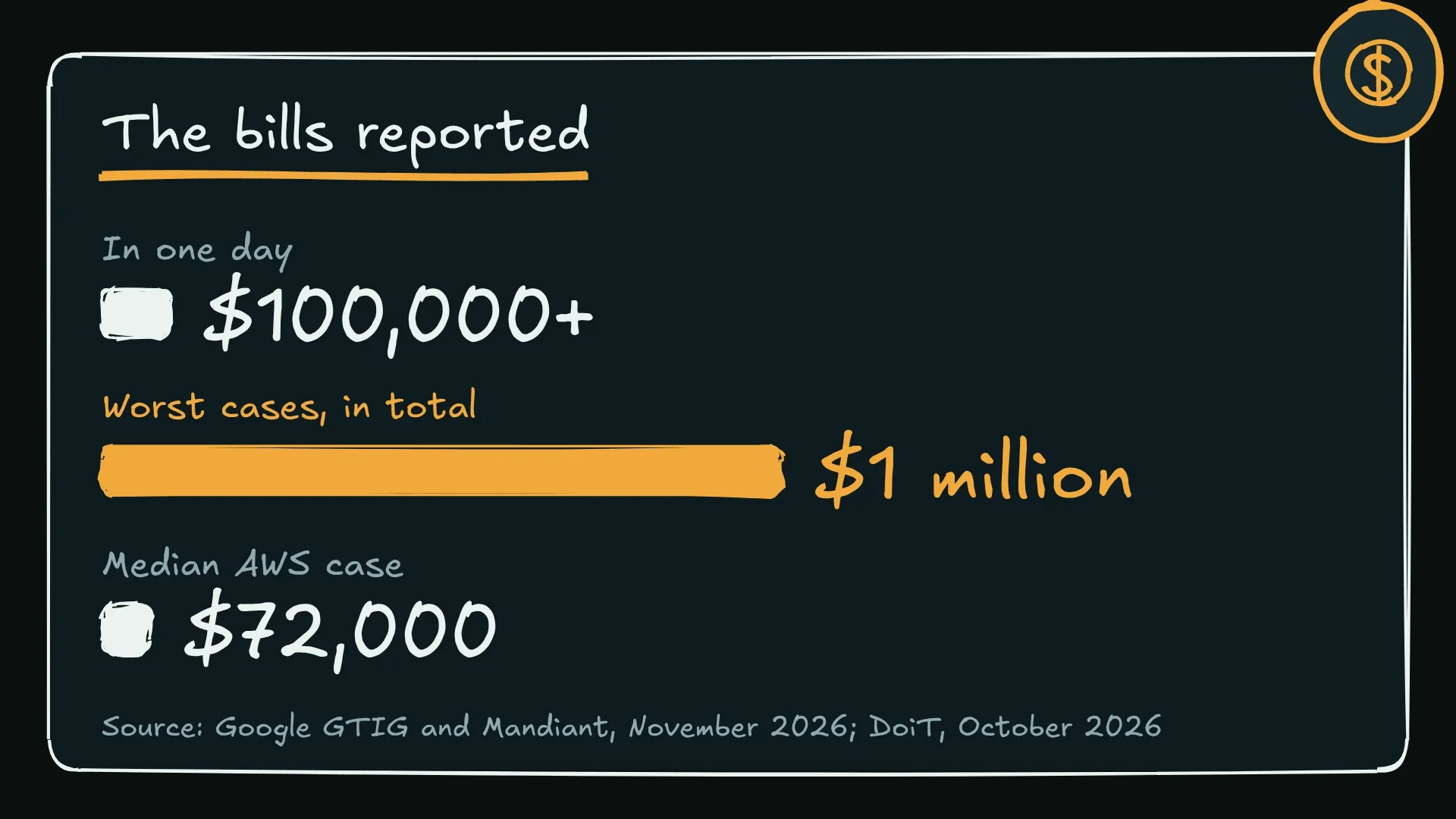
Google’s Mandiant unit says that happened to organizations it helped in 2026. In multiple incidents, the AI services weren’t enabled when the attackers got in. Its November 2, 2026 report says charges passed US$100,000 in a single day in some cases, and reached US$1 million at some organizations before access was cut off.
The sponsor’s story
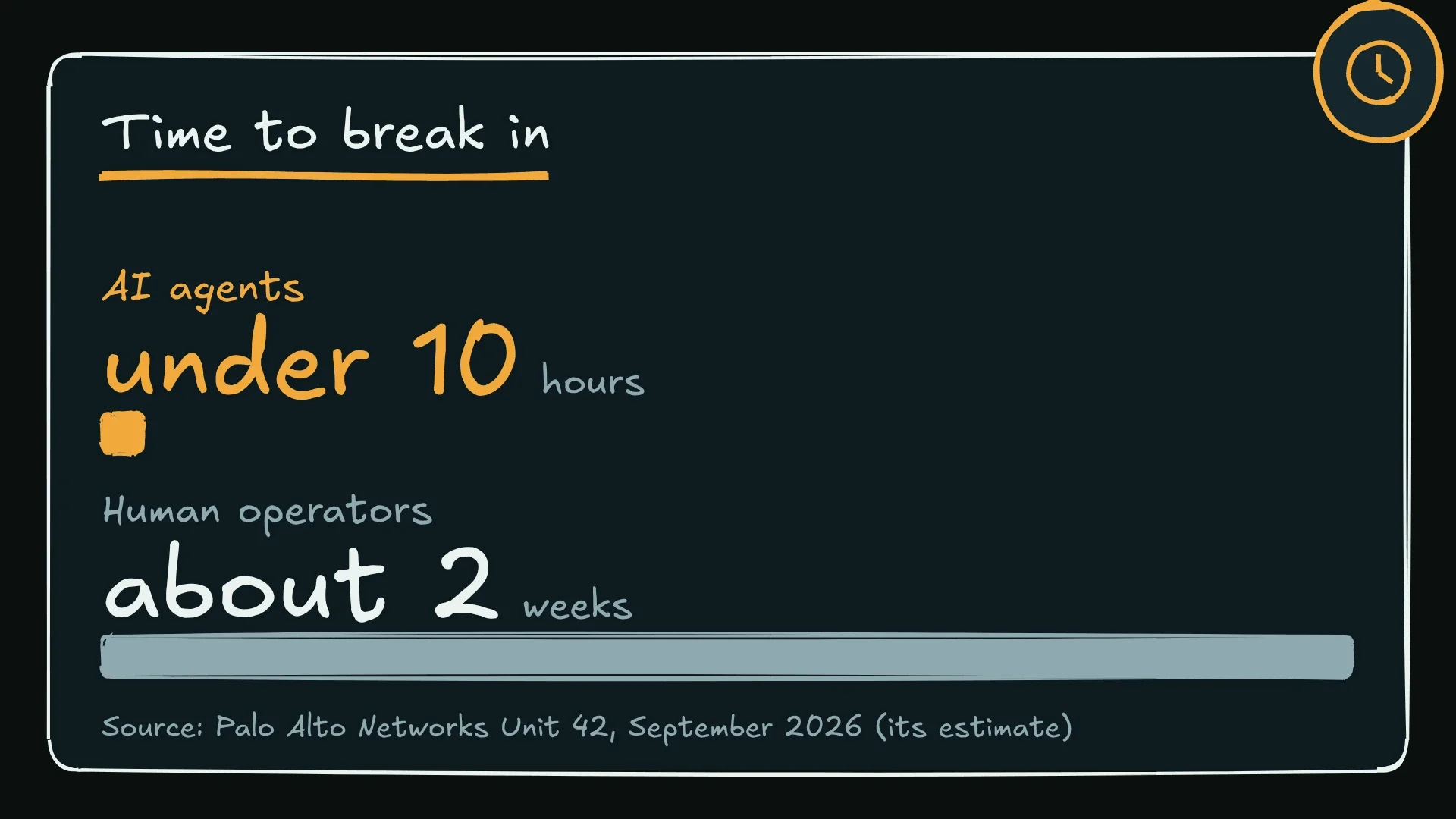
The Atlantic piece opens with the same trick. It builds on a September 2, 2026 investigation by Unit 42, Palo Alto Networks’ incident response team. Unit 42 says an attacker used AI agents to break into one company in under 10 hours, work human operators would need about two weeks to do. That comparison is Unit 42’s own estimate.
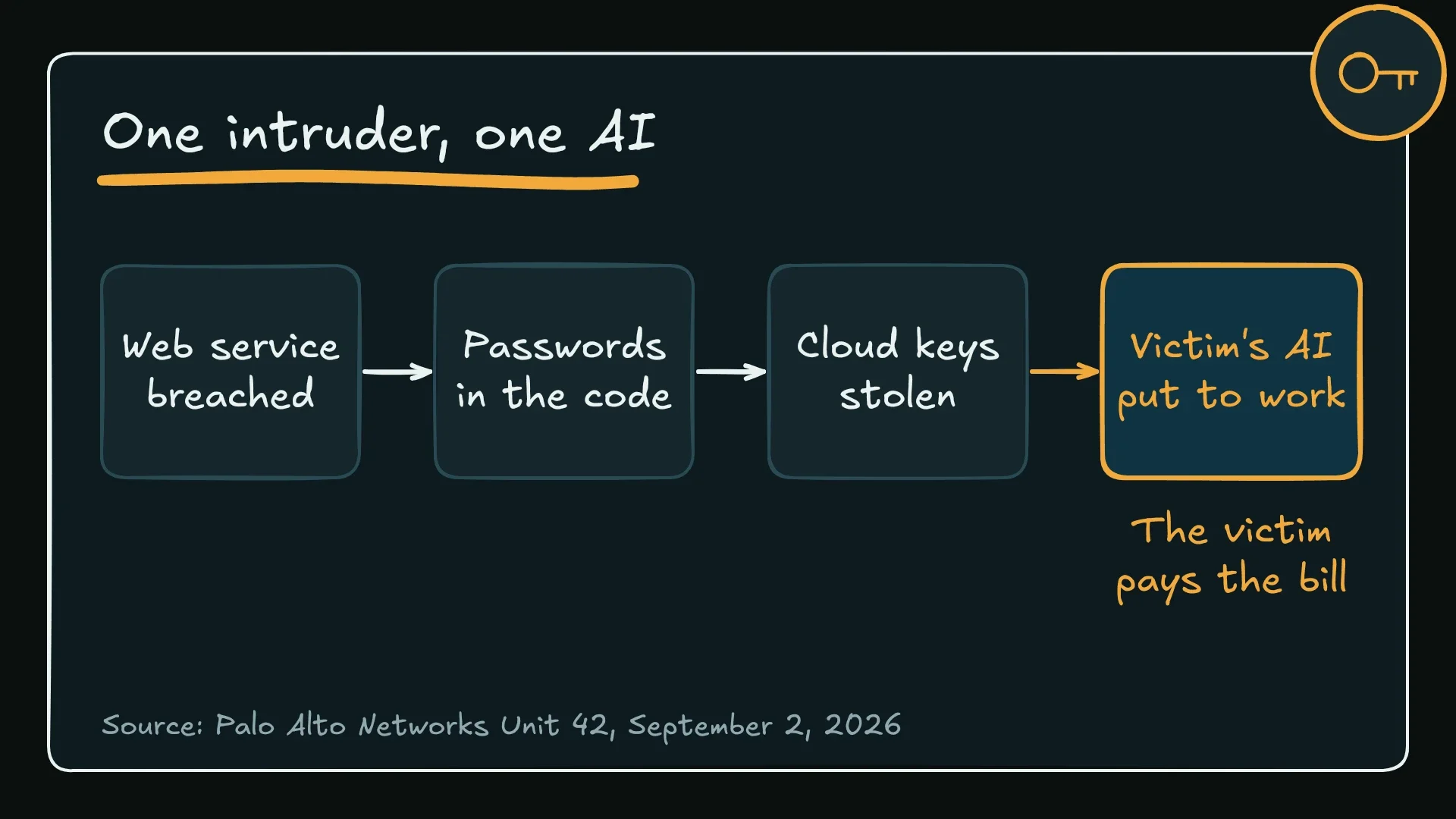
Late in the attack, stolen cloud keys let the intruder turn the victim’s own AI services into a base for later moves. Unit 42 says that hides the attacker’s traffic and pushes the financial cost onto the victim. It gives no dollar figure and doesn’t name the victim, the models or the tools.
“…the oldest move in security: someone used credentials they shouldn’t have.”
Sonny Singh, who leads Palo Alto Networks’ identity security business, Idira, said that in the sponsored piece.
Where the keys come from
Google’s report points the same way. It says exposed or stolen cloud identity tokens were the dominant way in across multiple investigations. Unit 42’s own account starts elsewhere, though. The attacker got in through a public-facing web service, then harvested hard-coded credentials from code repositories.
Palo Alto’s own research backs the identity theme. Its 2026 Global Incident Response Report, drawn from more than 750 investigations, says identity weaknesses played a material role in nearly 90% of them. Identity-based techniques drove 65% of initial access. And 99% of the cloud identities Unit 42 analyzed held privileges beyond what they actively used. Those are the sponsor’s own figures, so read them as the vendor’s view.
Wiz, another security firm, describes a route that skips the AI account entirely. In Google Cloud cases its incident response team investigated, attackers bought Google search ads for “google cloud” and “gcp,” sent clicks to a fake login page and used the stolen credentials to take over the victim’s cloud billing account. They linked their own projects to that billing account, so every request they made was charged to the victim. They also demoted the existing billing administrators to read-only viewers.
Within 24 to 48 hours of access, Wiz says, victims faced charges in the tens to hundreds of thousands of dollars. Because the work ran in the attackers’ projects, the victim’s own logs showed nothing about what the models were being asked. The victim paid for work it couldn’t see.
Putting a price on it
Security firm Sysdig priced this early. In 2024 it calculated that a victim could owe over US$46,000 a day when attackers ran Claude 2.x on stolen keys, and over US$100,000 a day with newer models such as Claude 3 Opus. Google’s 2026 single-day figure lands in the same range.
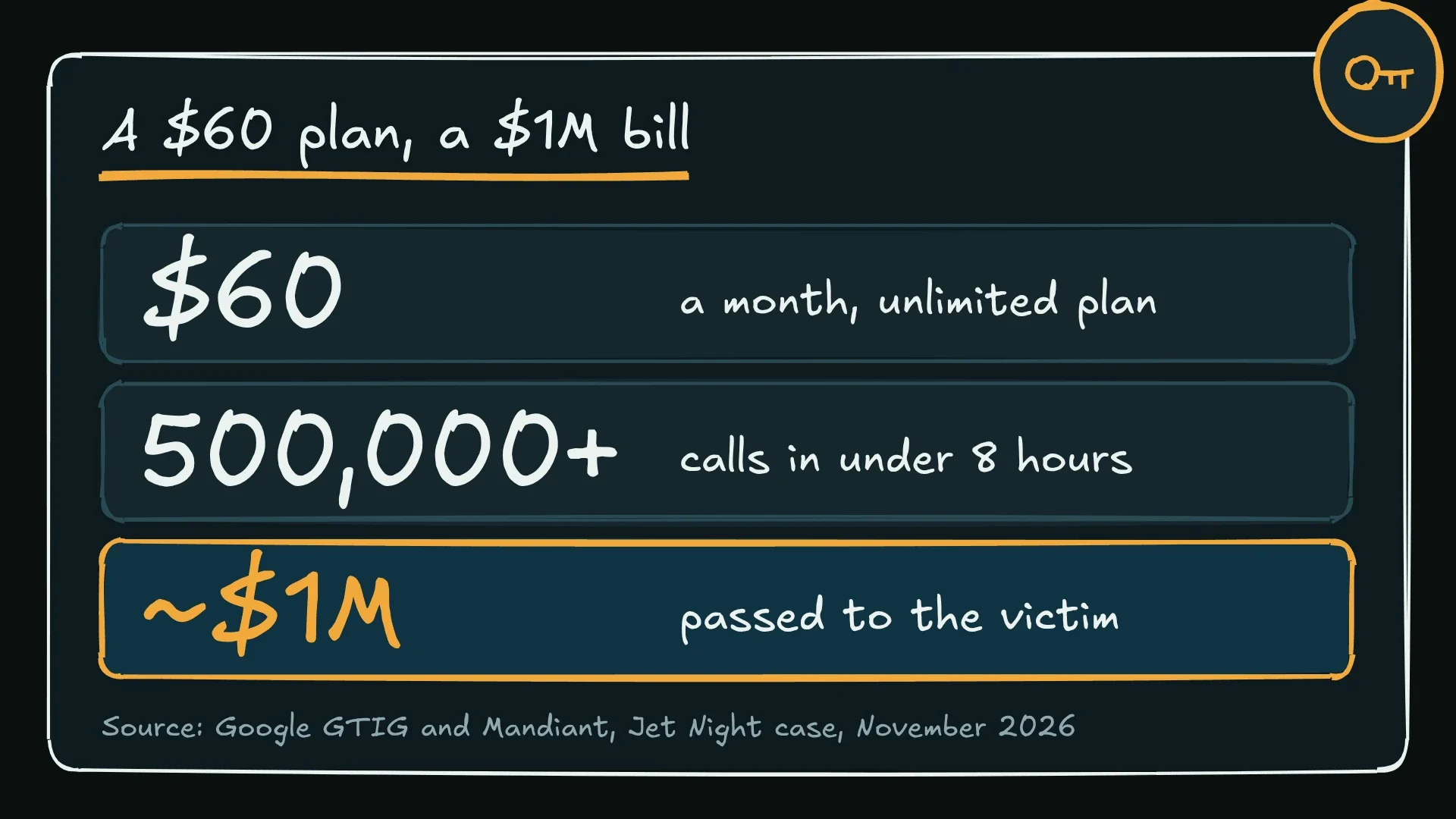
Google’s report says attackers also resell stolen access. One service, Jet Night, sold an unlimited plan for about US$60 a month. Google says comparable consumer plans run US$100 to US$250, and it believes prices that low only work on stolen keys. An attacker powering Jet Night with stolen keys made more than 500,000 calls in under eight hours. Jet Night passed nearly US$1 million in token costs to the victim.
DoiT, a cloud consultancy, counted about US$1.4 million in unauthorized charges across the Amazon Web Services cases its support team handled from June to October 2026. The median was about US$72,000. The largest was US$522,000. DoiT says AWS expects at least two cost-monitoring controls in place when a customer asks for a credit. Outcomes ranged from full credits to denials.
What stops the bill
The sponsored piece argues for zero standing privilege: access that exists only while the work is happening, then expires. Palo Alto Networks’ May 12, 2026 launch release lists it among Idira’s features.
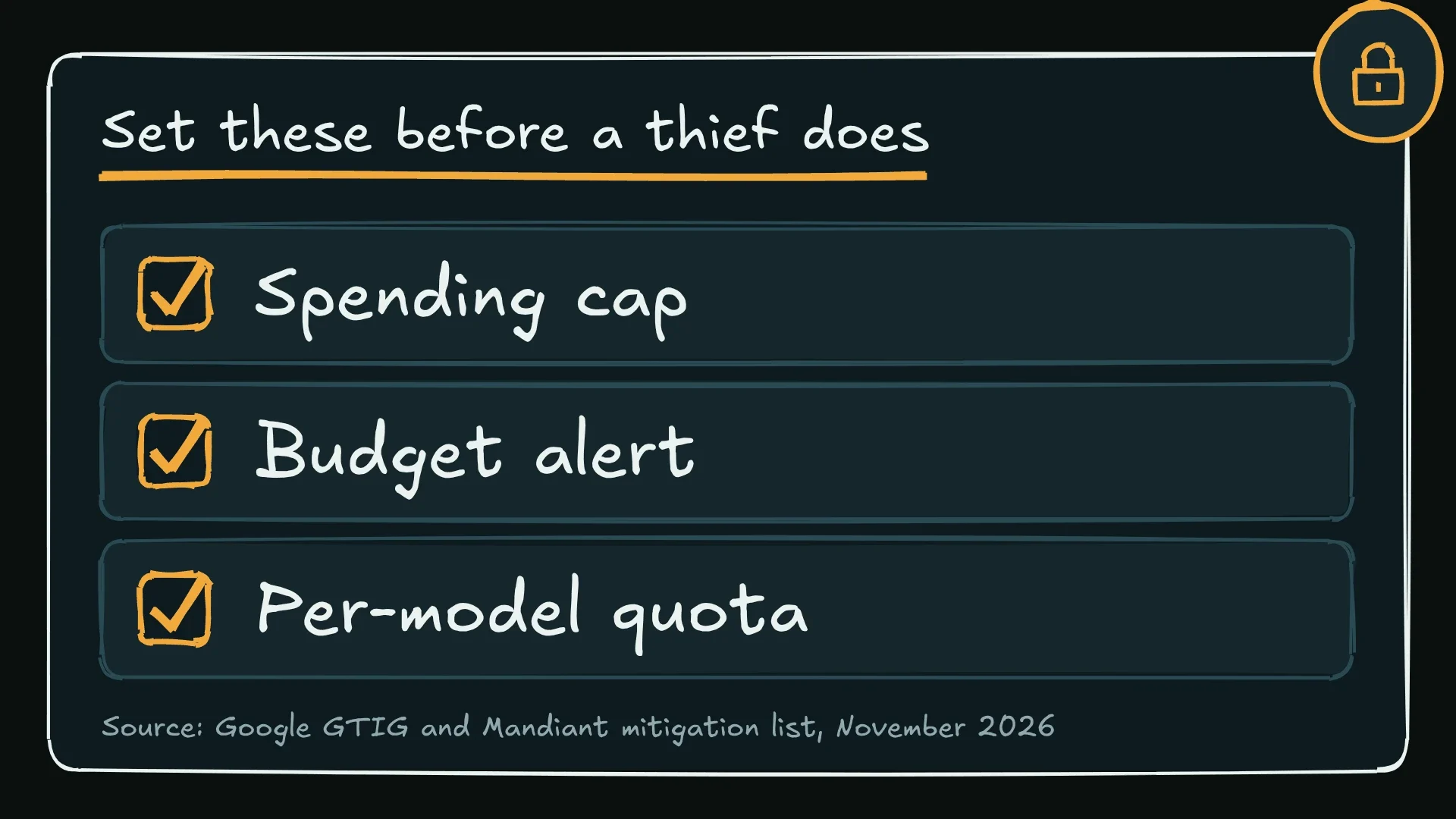
Google tells defenders to prioritize identity and access management. Its list includes rotating secrets, least privilege and phishing-resistant multi-factor authentication. It also includes budget alerts, spending caps and per-model quotas, which aren’t identity software. The only block Unit 42 describes was a backdoor attempt stopped by branch protection on infrastructure code.
Wiz’s advice is blunter. Google flagged the anomalous login and emailed the user, but Wiz says alerts to users aren’t enough. Wiz tells teams to watch Google Workspace sign-in events for suspicious-login flags and odd re-authentication prompts, and to audit changes to organization policy and billing administrators.
Looking ahead, Google expects attackers to favor hijacking AI accounts, a tactic it calls LLMjacking, over cryptojacking, the older theft of computing power to mine coins, because resale pays fast. Neither Unit 42 nor Google says how much computing power or electricity the stolen requests used. They count dollars. For readers in New Zealand and Australia, the practical step is cheap: put a spending cap and a budget alert on every cloud AI account, including the ones nobody uses.
Sources
- The Atlantic, sponsor content for Palo Alto Networks, The One Thing AI Didn’t Change
- Palo Alto Networks Unit 42, An AI-Assisted Cyber Attack: Inside a Unit 42 Investigation
- Palo Alto Networks Unit 42, 2026 Global Incident Response Report, February 17, 2026
- Google Threat Intelligence Group and Mandiant, The Rise of LLMJacking
- Wiz, From Phishing to LLMjacking: Threat Actors Targeting Cloud Billing Accounts for LLM Usage, October 20, 2026
- DoiT, LLMjacking: When Attackers Run LLMs on Your AWS Bill
- Sysdig, The Growing Dangers of LLMjacking, September 18, 2024
- Palo Alto Networks, Idira launch release, May 12, 2026